
We live in an era where documenting our daily lives is a deeply ingrained habit. When we eat a beautiful meal, visit a scenic beach, or attend a lively social event, our first instinct is often to pull out our smartphones to capture the moment. It feels entirely natural to want to record special experiences to share with friends and family. Attending a live performance by the Hawaiʻi Symphony Orchestra at the Neal S. Blaisdell Concert Hall is certainly a special occasion worth remembering. The sight of eighty musicians perfectly synchronized on a brightly lit stage is visually stunning.
However, the culture of a classical symphony concert differs drastically from a standard rock concert or a sporting event. At a pop music arena show, thousands of glowing smartphone screens fill the air, and artists often encourage fans to record their favorite songs. In a classical concert hall, the environment requires a completely different approach. The acoustic design of the venue, the intense concentration required by the musicians, and the strict legal contracts governing the musical arrangements dictate a much stricter policy regarding cameras.
If you are attending your first masterworks performance, you might feel unsure about when it is acceptable to use your device. This guide explains the official rules regarding photography and recording inside the auditorium, details how digital devices disrupt the acoustic environment, and highlights the specific moments when taking pictures is enthusiastically encouraged.
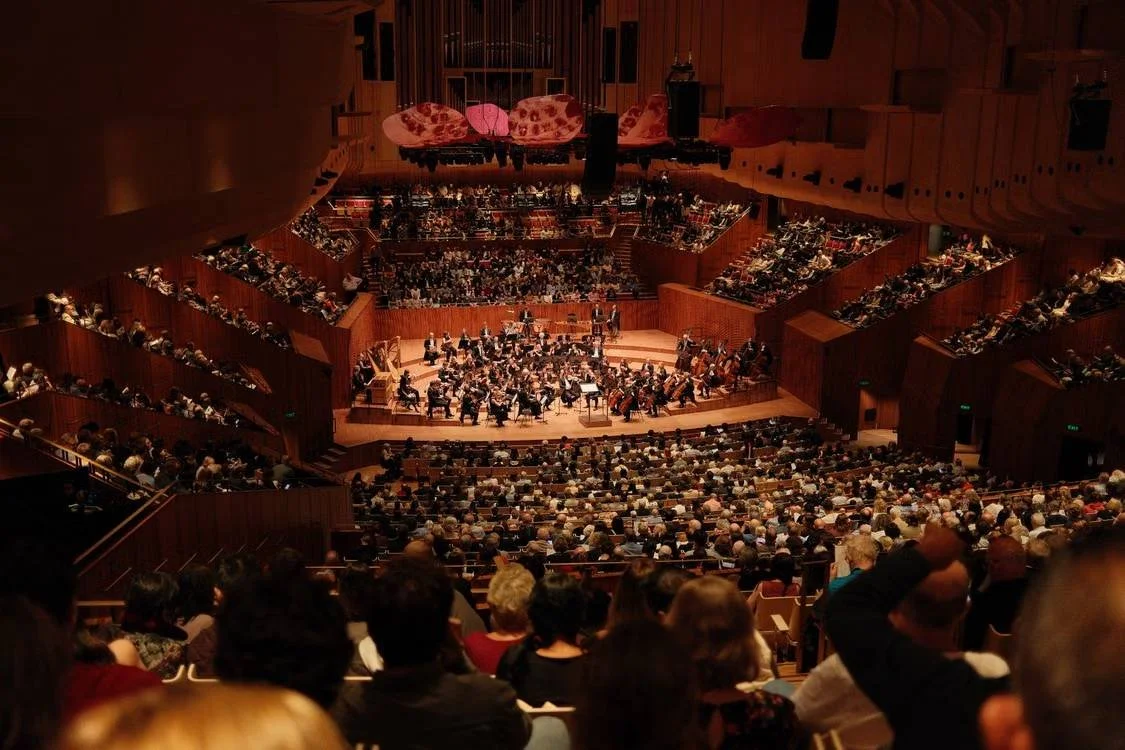
While common at pop concerts, smartphone recording is strictly prohibited during symphony performances.
The Official Policy on Photography and Recording
The golden rule for attending a classical symphony concert is straightforward. Once the conductor steps onto the podium and lowers their baton, all photography, video recording, and audio recording must cease entirely. The Hawaiʻi Symphony Orchestra strictly prohibits capturing any media while the musicians are actively performing the musical program.
This prohibition is not simply an arbitrary etiquette rule designed to enforce an old-fashioned atmosphere. It is deeply rooted in international copyright law and complex artist contracts.
When a guest soloist travels to Honolulu to perform a concerto, their contract includes strict stipulations regarding the distribution of their likeness and their unique musical interpretation. Professional musicians earn their livelihood through authorized recordings and ticket sales. Unauthorized amateur recordings distributed on social media platforms or video-sharing websites violate these contractual protections. Furthermore, the musical arrangements themselves are often rented directly from publishing houses. These publishers hold the exclusive rights to the sheet music being performed. Recording the performance infringes upon the intellectual property rights of the living composers and the publishing entities.
| Media Type | Concert Status | Venue Policy |
|---|---|---|
| Still Photography (No Flash) | During the performance | Strictly Prohibited |
| Video Recording | During the performance | Strictly Prohibited |
| Audio Recording | During the performance | Strictly Prohibited |
| Still Photography | Before the concert begins | Enthusiastically Permitted |
Ushers actively monitor the auditorium during the performance to enforce these legal requirements. If they spot a glowing screen or a recording device pointed toward the stage, they will quickly navigate to the patron's seat. They will politely but firmly request that the device be put away immediately. In cases of repeated violations, venue security may ask the patron to leave the auditorium entirely.
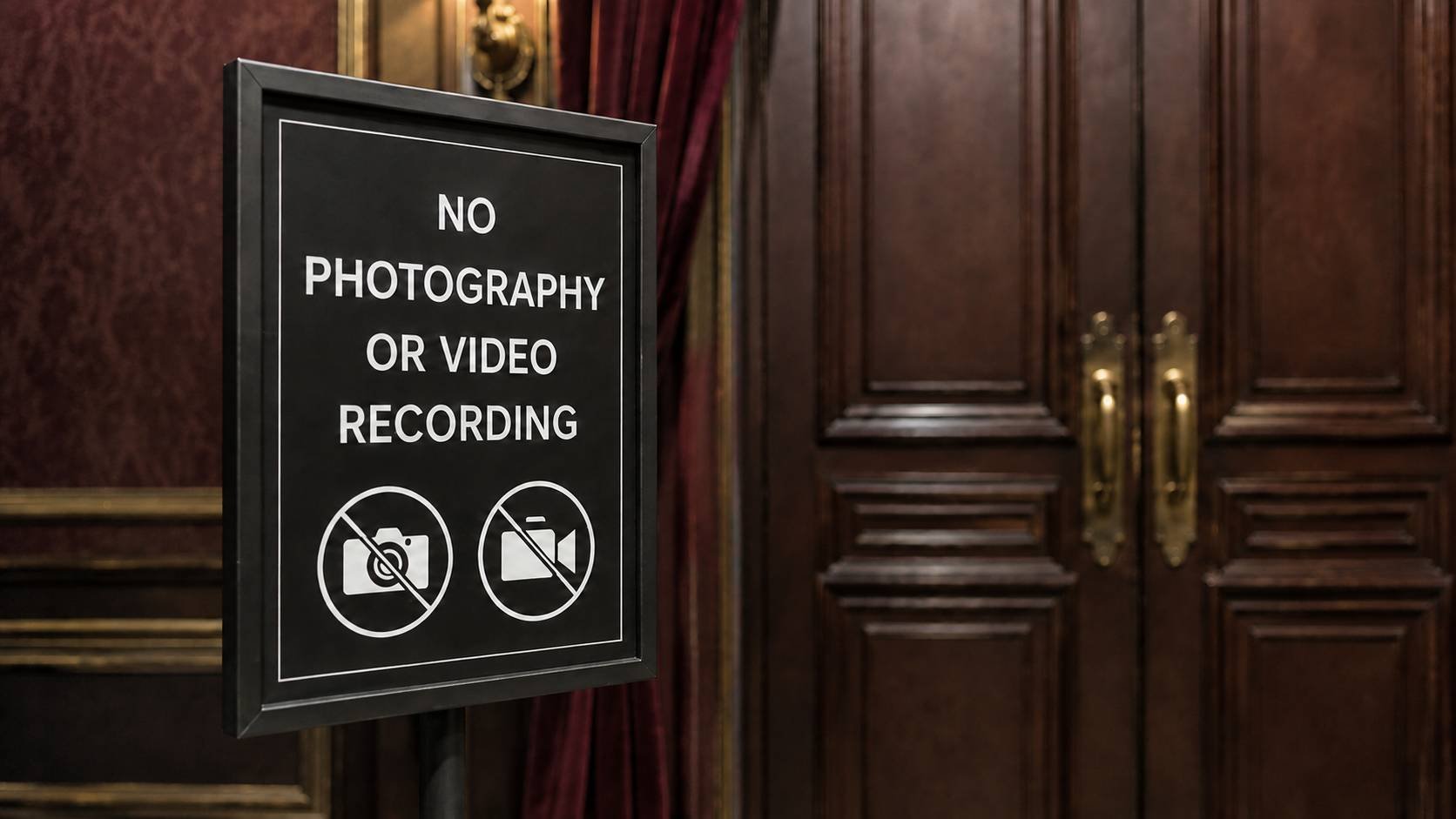
Venues enforce strict no-photography rules to protect copyright and maintain the atmosphere.
The Disruptive Power of Screen Brightness
Beyond the legal implications of copyright infringement, taking photos during a symphony destroys the carefully cultivated visual atmosphere of the concert hall. The lighting design inside the Neal S. Blaisdell Concert Hall is highly intentional. During a performance, the house lights above the audience dim completely. The stage lights illuminate the musicians brilliantly, directing the visual focus of everyone in the room exactly where it belongs.
When a patron pulls out a smartphone in a completely dark auditorium, the device acts like a high-powered flashlight. Modern smartphone screens emit a harsh, blue-tinted light. If you sit in the middle of a row and turn your screen on to frame a photograph, that bright light immediately spills into the peripheral vision of everyone sitting behind you and beside you.
Human eyes naturally adapt to the darkness of the theater. A sudden burst of digital light breaks that visual adaptation. It pulls the attention of the surrounding audience away from the stage and forces them to focus on the glowing rectangle hovering in the air. Even if you turn your screen brightness to the lowest possible setting, the contrast against the pitch-black auditorium remains incredibly jarring. This visual pollution ruins the immersive experience for the patrons who paid for their tickets to enjoy a focused, uninterrupted artistic presentation.

A glowing screen in a dark theater is highly distracting to everyone sitting nearby.
Acoustic Sensitivity and Incidental Noise
Classical concert halls are designed to amplify tiny acoustic vibrations. The Blaisdell Concert Hall features wooden panels and acoustic reflectors that capture the sound of an unamplified violin and project it perfectly to the back rows of the balcony. Because the room is so acoustically sensitive, it amplifies unwanted noises just as efficiently as it amplifies the orchestra.
Using a smartphone or a digital camera introduces a host of disruptive sounds into this pristine acoustic environment.
Many people forget to silence the mechanical shutter sound on their phone cameras. In a quiet, emotional musical passage, the artificial click of a digital shutter echoes sharply across the seats. Digital cameras also emit high-pitched electronic beeps when their autofocus lenses lock onto a subject. These mechanical and electronic noises clash violently with the organic, acoustic sound of the symphonic instruments.
Additionally, the physical act of taking a photograph creates secondary noises. Reaching into a purse or a pocket to retrieve a phone causes fabric to rustle. Zippers click against metal clasps. Occasionally, a patron will accidentally drop their device while trying to hold it steady in the dark. A heavy smartphone clattering against the wooden floorboards creates a massive acoustic disruption that can derail the concentration of the entire audience.
The Impact on the Musicians on Stage
The prohibition against photography also serves to protect the performers. Playing professional orchestral music requires absolute mental focus. The musicians must read complex sheet music, watch the conductor for precise tempo cues, and listen to their section neighbors to ensure perfect intonation.
When patrons take photographs from the audience, they frequently forget to disable their camera flashes. A sudden burst of white light from the third row is incredibly blinding to the musicians sitting on stage. It forces them to blink rapidly and lose their place on the printed page. A single missed note in a complex symphony can throw off the rhythm of the entire ensemble.
The conductor also suffers when devices appear in the audience. The conductor relies on peripheral vision to monitor the outer edges of the orchestra. Flashing lights and glowing screens moving in the dark auditorium pull their visual focus away from the musicians. To perform a flawless masterwork, the artists require a stable, dark, and supportive environment free from visual surprises.
When Photography Is Enthusiastically Encouraged
While the rules during the performance are strictly enforced, the Hawaiʻi Symphony Orchestra loves when patrons share their concert experiences. There are several specific moments during your visit when photography is fully permitted and warmly encouraged.
The lobby of the Blaisdell Concert Hall serves as the perfect backdrop for documenting your evening out. The venue features elegant architecture and large glass windows overlooking the Honolulu skyline. Arriving early provides ample time to take group photos with your friends or family members before entering the main auditorium.
Once you find your seats inside the hall, you are welcome to take photos of the stage and your surroundings before the concert officially begins. Many patrons enjoy capturing pictures of the empty stage setup or snapping a quick selfie holding their printed program book.
| Acceptable Photo Moments | Context | Recommendation |
|---|---|---|
| Pre-Concert Lobby Arrival | Before entering the seating area. | Perfect for capturing elegant evening attire and group shots. |
| Seated Before the Downbeat | While the house lights are still fully illuminated. | Ideal for taking photos of the stage setup or a selfie with your program. |
| During the Intermission | When the musicians leave the stage for their break. | A great time to document your view from the balcony or loge. |
| Post-Concert Applause | After the final piece concludes and the house lights rise. | Capture the musicians taking their final bows and the standing ovation. |
The crucial transition point occurs when the house lights dim and the concertmaster steps onto the stage to tune the orchestra. This serves as the universal signal to put your device away. You must switch your phone to silent mode or airplane mode and store it securely in your bag or pocket until the intermission begins.
When the concert concludes and the conductor turns to face the audience for their final bows, the house lights will eventually rise. At this point, the performance is officially over. You are free to retrieve your phone and take photos of the artists receiving their standing ovation.
Sharing Your Experience Responsibly
The Hawaiʻi Symphony Orchestra relies on passionate community members to spread the joy of live music. When you capture those pre-concert selfies or post-concert ovation photos, sharing them on social media helps support the local arts scene.
You can tag the official orchestra accounts on platforms like Instagram and Facebook. Using location tags for the Blaisdell Center lets your network know you are supporting live cultural events in Honolulu. Engaging with the orchestra online builds a stronger community of music lovers across the islands.
By separating the act of documentation from the act of listening, you get the best of both worlds. You secure the digital memories of your evening out while remaining fully present and respectful during the artistic performance.
Plan Your Next Distraction-Free Evening
Disconnecting from digital devices for two hours offers a rare opportunity for genuine mindfulness. By keeping your phone tucked away during the music, you allow yourself to become completely absorbed in the acoustic power of a live symphony.
Explore upcoming classical masterworks, engaging cinematic presentations, and special guest artists on the official Hawaiʻi Symphony Orchestra Calendar. To secure your seats for an upcoming performance at the Neal S. Blaisdell Concert Hall, visit the HSO Ticketing Portal or browse comprehensive venue policies on the HSO FAQ Page.