
Music Education Concerts in Hawaiʻi: Connecting Students With Live Orchestra
Live orchestral music gives students a chance to experience sound, musicianship, and storytelling in a way that recordings cannot fully reproduce. A concert can introduce the sound of an orchestra, help students recognize instruments, and give young musicians a clearer picture of what ensemble performance looks like in practice.
At the Hawaiʻi Symphony Orchestra, education and community engagement are part of our public mission. We believe orchestral music can connect people across generations while reflecting the cultural identity of Hawaiʻi and the wider Pacific.
For educators, families, and young musicians, there is more than one way to make that connection with us.
What Can Students Learn From a Live Orchestra?
When students see an orchestra perform live, they can watch how musicians listen closely, respond to a conductor, and make individual parts work within a larger piece of music.
Depending on the program, a concert can help students explore questions such as:
How do different instrument families create their sound?
What does a conductor communicate to an orchestra?
How can a composer use rhythm or melody to tell a story?
How does an ensemble turn many individual parts into one performance?
How can orchestral music reflect a particular place or culture?
We see these experiences as a complement to classroom music education, not a replacement for a music teacher.
Educators can help students get more from a concert by listening to repertoire beforehand, discussing instruments or musical ideas, and returning to those ideas after the performance. Even a short conversation before and after a concert can give students something specific to listen for and discuss.
Learning Beyond a Traditional Concert
Not every educational experience with us needs to follow the format of a full classical concert.
Our Beyond the Music series is designed around learning and context. We use excerpts from Masterworks repertoire alongside discussion that helps audiences explore the music more deeply.
That format can be especially useful for students or first-time concertgoers because it makes room for the questions surrounding a piece as well as the performance itself. Rather than assuming listeners already know the repertoire, we can provide context that offers a clearer entry point.
For educators, these experiences can also create opportunities to connect music with history, literature, cultural studies, or other classroom subjects when the repertoire supports those connections.
Connecting Orchestral Music With Hawaiʻi
Music education can become more meaningful when students recognize connections between what they hear and the place where they live.
Our public mission emphasizes Hawaiʻi's cultural identity as well as connections across the Pacific. Our programming has included collaborations with Hawaiʻi artists and music shaped by local or Pacific perspectives.
HapaSymphony is one example. Through this series, we have paired Hawaiʻi artists with the orchestra, creating performances where familiar local musical voices meet an orchestral setting.
We have also presented and commissioned work connected with Hawaiʻi and the Pacific. These programs can help students understand that an orchestra is not limited to music from one country, period, or tradition. It can also participate in contemporary musical life here in Hawaiʻi.
We do not see local culture and orchestral tradition as competing choices. Thoughtful programming can give students opportunities to hear how musical traditions meet and take on new forms.
Side-by-Side Experiences for Young Musicians
For students who already play an instrument, one of the most direct ways to learn from professional musicians is to share an orchestral setting with them.
We have collaborated with Hawaiʻi Youth Symphony on side-by-side projects that bring developing musicians together with professional orchestra musicians. In these programs, students can experience the rehearsal expectations, ensemble listening, and preparation involved in a large orchestral performance.
That experience offers something different from watching a concert from the audience. A young musician must respond in real time to the conductor, their section, and the full ensemble.
Because individual education and youth programs can change by season, we encourage students and families to check current HSO and Hawaiʻi Youth Symphony information rather than assuming a past side-by-side opportunity is presently available.
Films in Concert Can Be an Accessible Starting Point
A student's first connection with orchestral sound may come from a movie rather than a classical concert.
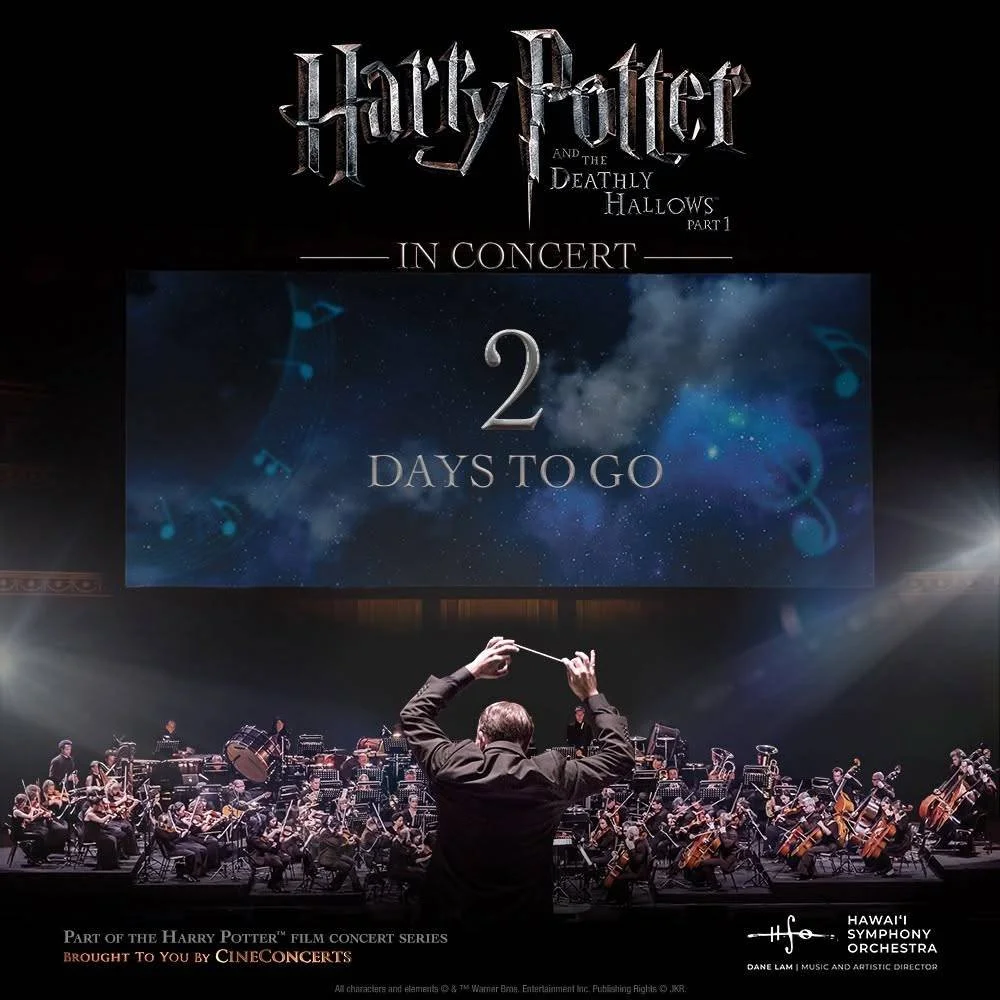
Our Films in Concert performances pair a film on the big screen with its score performed live by the orchestra. For students who already recognize music from movies, hearing that score played in the room can make the role of an orchestra immediately understandable.
Film music can open useful conversations about how composers support a scene, establish a character, or change the emotional meaning of what an audience sees.
It can also provide an entry point to broader listening. Once a student begins noticing orchestration in a familiar film score, ideas such as instrumental color, recurring themes, and musical storytelling can become easier to recognize elsewhere.
We do not see Films in Concert as a replacement for classical repertoire. It is another way to explore the larger question of what an orchestra can communicate through sound.
Finding Accessible Orchestra Experiences in Hawaiʻi
Cost, transportation, scheduling, and familiarity with orchestral music can all affect whether attending a concert feels practical.
We have publicly described free community and education concerts as part of our work, while our broader season also includes a range of ticketed performances. Since individual programs and event details can change, you can explore our current HSO concerts before planning a visit.
For school, youth, or other larger groups, you can also review our current ticketing and group sales information. We recommend checking the details for the specific performance you are considering rather than relying on past pricing or group policies.
If your family expects to attend more than one performance, you can also review options such as our Pick Four Flex package to see whether a current package fits your plans.
For a child's first orchestral concert, the best choice is not necessarily the most traditional program. Think about the student's interests, previous musical experience, and the type of performance most likely to hold their attention.
A student who already loves movie music may connect with Films in Concert. A young instrumentalist may be especially interested in seeing a full orchestra work together. Another student may respond most strongly to a program that connects music with Hawaiʻi or the wider Pacific.
How Educators Can Build Around a Concert Experience
A live performance can become more useful when it connects to learning before and after the event.
Before attending one of our concerts, educators might introduce the instruments students will see, listen to a short excerpt from the repertoire, or discuss the cultural and historical context of a work.
Students can also develop a few listening questions to carry into the performance:
Which instruments stand out during different sections?
How does the music change when the mood changes?
What does the conductor appear to communicate to the musicians?
Does hearing the music live change the way it sounds or feels?
Afterward, the class can compare what students expected with what they actually heard. Young musicians might focus on ensemble technique or communication, while other students may respond more to musical storytelling or the emotional effect of particular sounds.
Our goal is not to turn every student into a musician. A worthwhile music education experience can also help create a more attentive listener, a curious audience member, or a student who discovers that live orchestral music has something to offer them.
How Families Can Introduce Children to Orchestra Music
A child's first orchestra experience does not have to begin in the concert hall.
Listening together at home can give children a reference point before attending one of our performances. Families can choose a short orchestral piece, a familiar film score, or music connected to something the child is already interested in.
Instead of asking whether the child "understands" the music, try simpler questions:
What instrument did you notice first?
Did the music remind you of a place, person, or story?
When did the music become louder or quieter?
Which sound would you want to hear again?
There is no single correct way to listen.
When families later attend a live performance with us, children may begin connecting the sounds they recognize with the musicians creating them onstage.
Parents and caregivers can browse our current HSO concert calendar to find a program that fits their family's interests.
Supporting Music Education in Hawaiʻi
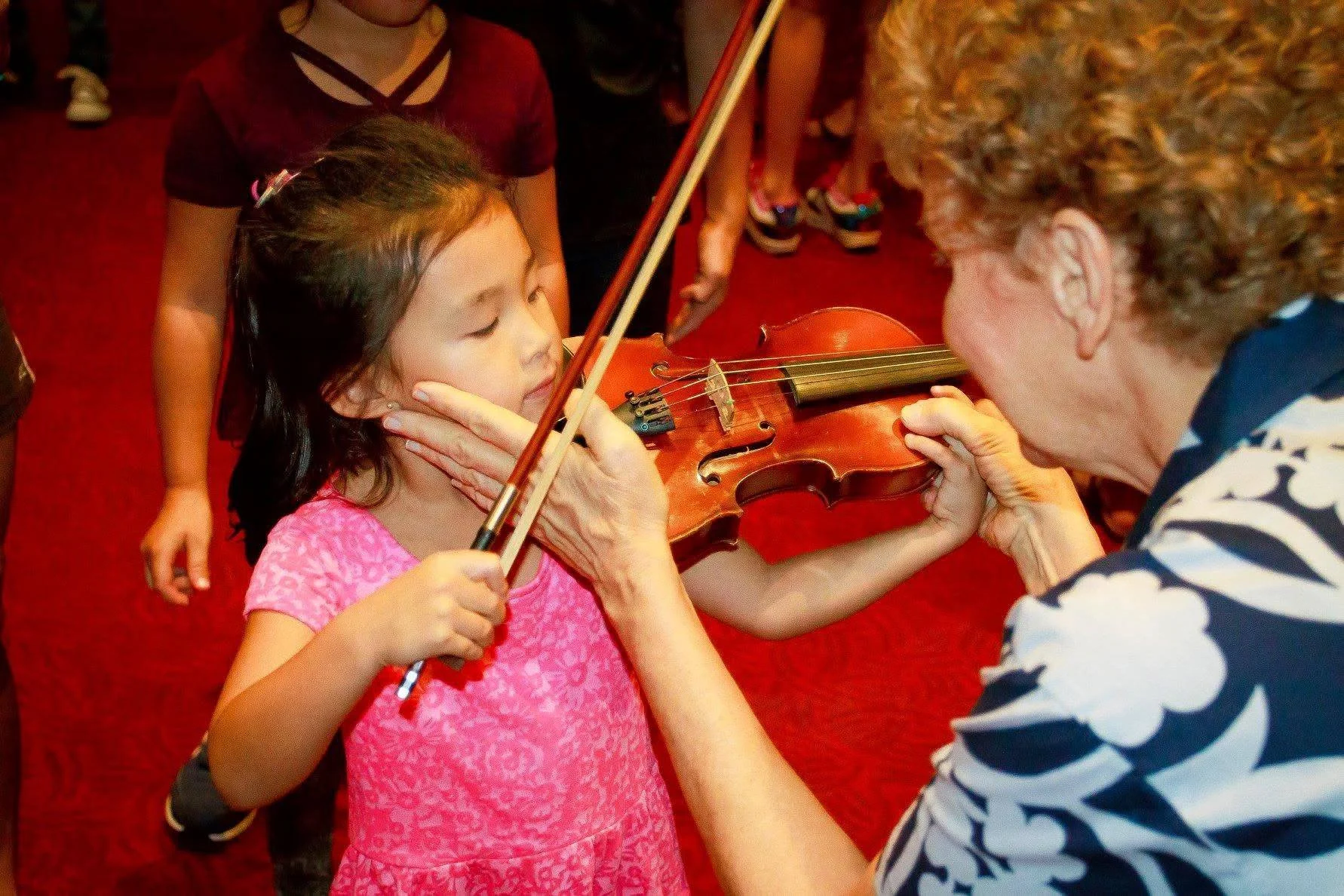
If you are an educator, you can look for current HSO learning opportunities that fit your students and curriculum. Families can introduce children to live performance through programs suited to their interests. Young musicians can watch for collaborative opportunities that provide experience alongside other developing or professional performers.
Community support also helps us continue our performance, education, and community work. If you would like to contribute, you can learn more about ways to support the Hawaiʻi Symphony Orchestra.
The specific programs we offer can change from season to season, but the larger opportunity remains the same: helping more people in Hawaiʻi encounter live orchestral music and understand how it connects with their community.
Ready to experience the orchestra live? Browse our upcoming programs and buy tickets through our official box office.